


R&D
THROUGH BIOCONVERSION TECHNOLOGY,
WE ENHANCE THE FUNCTIONALITY AND UTILITY
OF RAW MATERIALS

- Raw Material Innovation
- We develop local agricultural and bio resources and food byproducts into high value added functional materials.
- Process Innovation
- Based on enzymatic hydrolysis and lactic acid bacteria fermentation, we improve the characteristics of raw materials and enhance their functionality and processability.
- Functional Innovation
- We develop ingredients that go beyond simply providing protein to address a variety of health factors, including blood sugar levels, muscle strength, absorption rates, and antioxidant properties.
- Platform Innovation
- Going forward, we will expand our R&D efforts to include personalized nutrition management services that combine health data with AI.
CORE R&D COMPETENCIES
Analysis of the Four Core R&D Technologies-
01
Bio conversion Technology
Advancement and Commercialization of Public Core Technologies : Based on the foundational patent for “fermentation of twin spotted cricket extract” transferred from the Jeonju Agricultural and Bio materials Research Institute, we have developed a proprietary fermentation process capable of industrial scale mass production. Maximizing Digestibility and Absorption Through Enzymatic Hydrolysis and Lactic Acid Bacteria Bioconversion : Insect protein in its polymeric form has a low digestibility when consumed as is and may cause aversion. NuriFarm has maximized the human body’s digestion and absorption rates by converting the protein into low molecular weight amino acids and peptides through a precision enzymatic hydrolysis process and fermentation with carefully selected lactic acid bacteria. Off flavor Control and Sensory Improvement : Through a bioconversion process, we have fundamentally reduced the unpleasant odors and flavors characteristic of insect derived raw materials, while amplifying anti-aging and bioactive compounds to ensure both functionality and sensory stability. -
02
High Performance Mineral Rearing and Ultra Fine Air Milling Processing System
Customized Nutritional Rearing Process : We design and implement specialized functional feed enriched with minerals beneficial to human health such as germanium and zinc to produce premium insect raw materials with maximized nutritional content right from the rearing stage. Ultra Fine Micro Air Milling Technology : Insect raw materials, which contain high levels of fat, are prone to clumping during conventional milling. NuriFarm has developed technology to process these materials into uniform, ultra fine powders with particle sizes ranging from 172 to 350 µm, significantly improving blend compatibility, mouthfeel, and solubility when applied to various food formulations. Smart Farming and Standardized Hygienic Processing : Through an ICT based smart farming system that controls temperature, humidity, and the environment, we have achieved stable productivity more than twice that of conventional farms. Furthermore, we have enhanced the stability of commercial supply by implementing hygienic processing procedures compliant with HACCP standards and establishing a large scale mass production system capable of upscaling to 50 kg or more. -
03
Food Upcycling and Low Carbon Resource Recycling Technologies (Eco Friendly Upcycling)
Converting Agricultural and Food Byproducts into High Value Resources : We have established a circular resource system that recycles various food byproducts such as sesame cake and hemp seed cake which are often discarded, into high quality feed for high nutrient insects. Reduction of Carbon Emissions and Environmental Footprint : We have established an eco-friendly protein production process that significantly reduces land use compared to traditional livestock farming (beef, pork, etc.) and cuts carbon emissions and water consumption by 20~30% or more. Establishing a Local, Win-Win Supply Chain : By integrating high quality local agricultural resources such as rice field beans from the Jeonbuk region into the Pulgami raw material production process, we foster mutual growth with local farmers and contribute to promoting the consumption of domestically produced agricultural products. -
04
AI and Data-Driven Smart FoodTech Convergence Platform
Digitization and Standardization of Process Data : We collect and analyze key process variables such as temperature, humidity, pH, enzyme reaction time, and microbial strain dosage during fermentation as digital data to ensure complete control over recipe reproducibility and quality consistency. Ensuring Scalability for Customized Medical Foods : Based on accumulated bio and nutritional data, we are laying the technical foundation to expand into a platform that provides hyper personalized medical foods and dietary recommendations tailored to the health indicators of specific target groups, such as the elderly, diabetes patients, and those with sarcopenia.
Dual-Functional Mechanism
Based on the Core Patented Probiotic Strain
(JB PML-131)
The core patented probiotic strain JB PML-131, optimized through Nuripfarm’s bioconversion process
The core patented probiotic strain JB PML-131 exhibits a unique dual function biological regulation mechanism that simultaneously targets diabetes and hyperlipidemia, two of the most common chronic metabolic diseases affecting modern people.
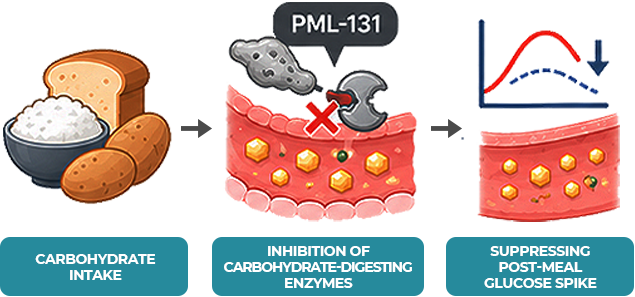
Antidiabetic Mechanism
(α-Glucosidase Inhibitory Activity)
By effectively inhibiting the α-glucosidase enzyme, which regulates the rate at which carbohydrates are broken down into glucose, this product prevents rapid postprandial blood glucose spikes and promotes blood glucose stability.
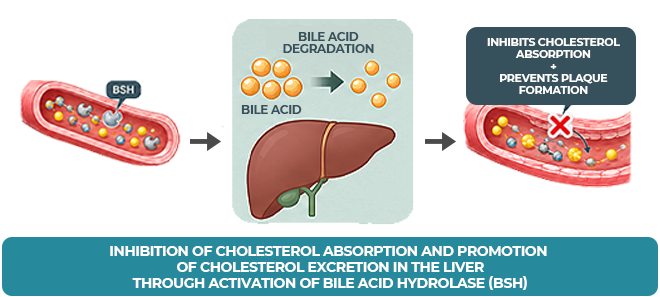
Antihyperlipidemic Mechanism
(BSH, Bile Salt Hydrolase Activity)
By isolating conjugated bile acids through bile salt hydrolase activity, it inhibits the absorption of cholesterol in the intestine and promotes its excretion from the body, thereby contributing to cardiovascular health.
Lactobacillus brevis Strain JB PML-131 with Antidiabetic and Antihyperlipidemic Activity
It is now widely recognized that elevated blood cholesterol levels caused by saturated fatty acids and cholesterol—resulting from excessive consumption of animal based foods—are a primary cause of atherosclerosis. Methods for lowering blood cholesterol levels include inhibiting endogenous cholesterol biosynthesis and consuming foods that reduce blood cholesterol levels; consequently, there is growing interest in the development of low-cholesterol livestock products and functional fermented foods that lower blood cholesterol levels. Currently, numerous studies have reported that fermented milk products and lactic acid bacteria particularly Lactobacillus acidophilus that lower blood cholesterol levels can reduce blood cholesterol levels.
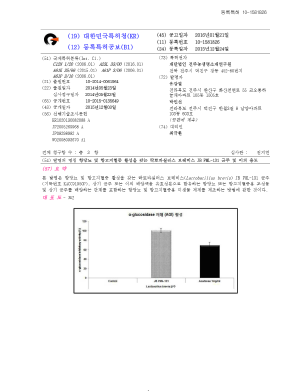
The core content of Nurifarm’s patent relates to a composition for treating diabetes and hyperlipidemia containing the Lactobacillus brevis JB PML-131 strain or its culture broth as an active ingredient, as well as a method for manufacturing a microbial preparation that includes the culture step for the aforementioned strain. The strain has been shown to possess excellent anti-hyperlipidemic activity due to its BSH activity and cholesterol-lowering efficacy (Patent No. 10-1581826). Key findings indicate that the Lactobacillus brevis JB PML-131 strain exhibits α-glucosidase inhibitory activity, intracellular glucose uptake activity, BSH activity, and cholesterol-lowering efficacy all without exhibiting cytotoxicity. As a result, it demonstrates excellent antidiabetic and antihyperlipidemic activity therefore, antidiabetic and antihyperlipidemic compositions containing the Lactobacillus brevis JB PML-131 strain or its culture supernatant as an active ingredient can be very useful as foods, food additives, or pharmaceuticals.
In type 2 diabetes, impaired insulin uptake and secretion lead to insulin resistance in peripheral tissues, including muscle and fat cells, and this impaired glucose uptake in these peripheral tissues results in elevated blood glucose levels. When insulin binds to the insulin receptor, it triggers a signaling cascade that allows glucose to enter the cell via GLUT4. In the experiment, to verify the AGI activity of the food derived lactic acid bacterium Lactobacillus brevis JB PML-131, an activity assessment was conducted using the culture supernatant of the strain, which was filtered through a 0.22 μm filter prior to use. A 0.2 U/mL α-glucosidase enzyme solution and 100 mM potassium phosphate buffer (pH 7.0) and 2.5 mM ρ-NPG dissolved in the buffer were added, and the mixture was allowed to react at 37°C for 20 minutes. The activity was then measured by determining the absorbance at 405 nm. The results confirmed that the culture supernatant of Lactobacillus brevis JB PML-131 exhibited significantly higher AGI activity than the positive control, acarbose.
CERTIFICATION
We have established a unique R&D infrastructure while having our technical capabilitiesand business viability verified by accredited organizations
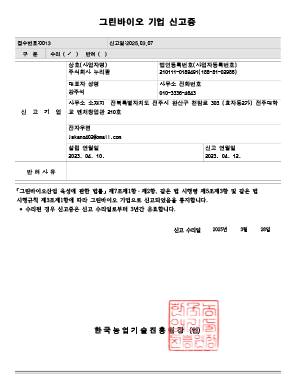
Certificate of GreenBio
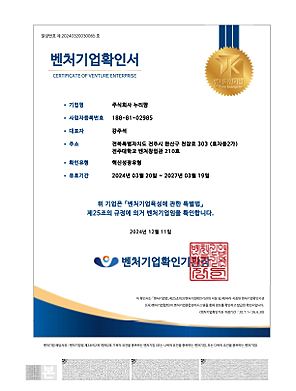
Venture company
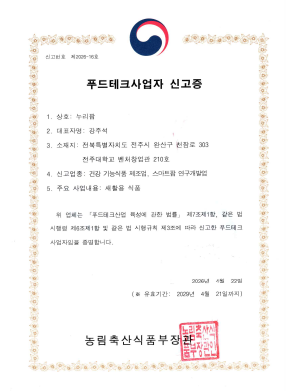
FoodTech company
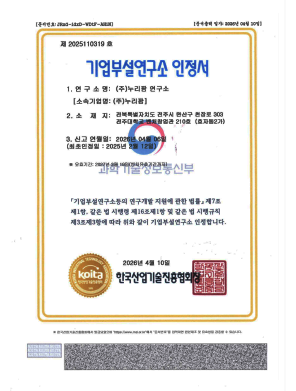
Corporate Research Institute
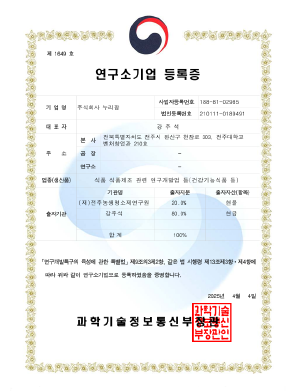
Research institute company
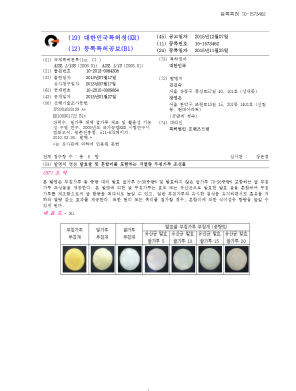
Patent (No.10-1573462)
Patent (No.10-1581826)
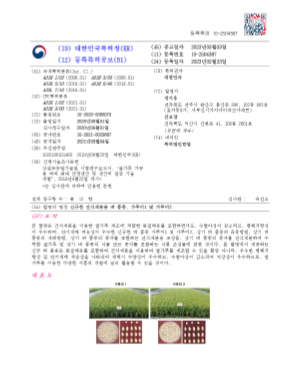
Patent (No.10-2504387)